

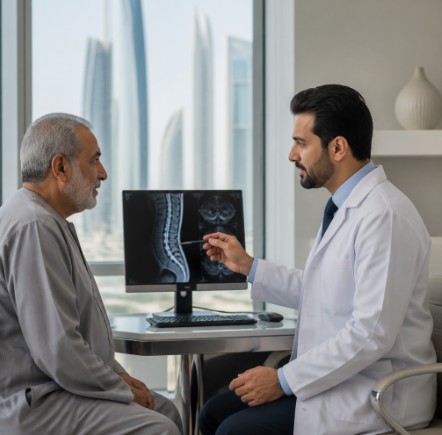
Chronic pain is one of the most underestimated health challenges of our time. It affects millions of people globally, disrupts daily functioning, strains relationships, and quietly erodes quality of life in ways that are difficult to quantify. In the Gulf region, and particularly in Abu Dhabi, the conversation around pain care has evolved significantly over the past decade. What was once managed with generalized prescriptions and basic physiotherapy has now become a sophisticated, multidisciplinary field — one that demands both clinical precision and a deep understanding of the patient as a whole person.
Understanding the Complexity of Chronic Pain
Pain is not simply a symptom. For many patients, it becomes a condition in itself — one that persists long after an injury has healed or a disease has been treated. Chronic pain can stem from musculoskeletal disorders, nerve damage, post-surgical complications, cancer, or conditions like fibromyalgia and complex regional pain syndrome. What makes it particularly challenging is its subjective nature: two patients with identical diagnoses may experience vastly different levels of discomfort, disability, and emotional distress.
This complexity is precisely why modern pain medicine has moved away from one-size-fits-all treatment models. Today’s leading pain specialists rely on a combination of interventional procedures, pharmacological strategies, psychological support, and rehabilitation to create individualized care plans. The goal is not merely to reduce pain scores on a scale, but to restore function, independence, and dignity to the patient’s life.
The Role of Interventional Techniques
Interventional pain management has become a cornerstone of modern treatment. Procedures such as nerve blocks, epidural steroid injections, radiofrequency ablation, and spinal cord stimulation offer targeted relief for patients who have not responded adequately to conventional therapies. These techniques are minimally invasive, often performed on an outpatient basis, and carry significantly lower risks than open surgical alternatives. When performed by experienced specialists using image-guided technology, they can deliver meaningful and lasting results.
Beyond the procedures themselves, the diagnostic process is equally critical. Accurate identification of the pain generator — whether it is a facet joint, a compressed nerve root, or a sensitized central nervous system — determines the entire course of treatment. Misdiagnosis at this stage can lead to years of ineffective care and unnecessary suffering.
Why Multidisciplinary Care Matters
The most effective pain management programs do not operate in silos. They bring together pain physicians, anesthesiologists, neurologists, orthopedic surgeons, psychologists, physiotherapists, and nutritionists under one coordinated framework. This team-based approach ensures that every dimension of the patient’s condition is addressed — from the physical source of pain to the psychological toll it takes over time.
Research consistently shows that patients treated within multidisciplinary pain programs report better long-term outcomes than those receiving single-modality care. They are more likely to return to work, maintain social engagement, and reduce their reliance on opioid medications. The integration of cognitive behavioral therapy, for instance, has proven particularly effective in helping patients reframe their relationship with pain and develop coping strategies that support recovery.
Vascular Pain and Its Unique Challenges
One area that deserves particular attention is pain associated with vascular conditions. Peripheral arterial disease, venous insufficiency, and related disorders can produce debilitating pain that is often misunderstood or undertreated. According to research published in the European Journal of Vascular and Endovascular Surgery, the management of pain in vascular patients requires a nuanced understanding of both the underlying pathology and the patient’s overall cardiovascular risk profile. Treating vascular pain effectively demands close collaboration between pain specialists and vascular surgeons — a model that is increasingly being adopted in advanced medical centers across the region.
The Growing Demand for Pain Specialists in the UAE
As the UAE’s population grows and ages, the prevalence of chronic pain conditions is rising in parallel. Lifestyle factors — including sedentary work environments, high rates of obesity, and the physical demands of certain occupations — are contributing to an increasing burden of musculoskeletal and neuropathic pain. At the same time, patient expectations are evolving. People are no longer willing to simply endure pain; they are seeking expert care that offers real solutions.
This demand has created a significant need for qualified pain medicine professionals. For healthcare practitioners considering specialization, it is worth noting that certain professional certifications in pain medicine and related fields offer strong career returns, both in terms of clinical impact and professional advancement. As the specialty grows, so does the value placed on formal training and board certification in pain management disciplines.
Cleveland Clinic Abu Dhabi: A Center of Excellence in Pain Medicine
Among the institutions leading this transformation in the UAE is Cleveland Clinic Abu Dhabi, which has established itself as a premier destination for patients seeking comprehensive, evidence-based pain care. For those living with persistent or complex pain conditions, access to pain management abu dhabi at this level represents a genuine turning point. The department brings together internationally trained specialists who employ the full spectrum of modern pain medicine — from advanced interventional procedures to integrated rehabilitation programs — all within a patient-centered environment that prioritizes dignity, transparency, and measurable outcomes.
The department’s approach reflects the broader philosophy of Cleveland Clinic, which has long been recognized globally for its commitment to clinical excellence and innovation. Patients benefit not only from cutting-edge treatments but also from a culture of continuous improvement, where outcomes are tracked, analyzed, and used to refine care protocols over time.
What Patients Can Expect
A first consultation at a specialized pain clinic typically involves a thorough review of the patient’s medical history, a detailed physical examination, and a discussion of previous treatments and their outcomes. Diagnostic imaging, nerve conduction studies, or other investigations may be ordered to clarify the underlying cause of pain. From this foundation, a personalized treatment plan is developed — one that is realistic, goal-oriented, and regularly reviewed as the patient progresses.
Patients are encouraged to be active participants in their own care. Setting functional goals — such as returning to a specific activity, reducing medication dependence, or improving sleep quality — helps both the patient and the clinical team measure progress in meaningful ways. Pain management is rarely a linear journey, but with the right support, most patients can achieve significant and lasting improvement.
Conclusion: A New Standard of Care for Chronic Pain
The landscape of pain medicine in Abu Dhabi has changed dramatically, and for the better. Where patients once faced limited options and fragmented care, they now have access to world-class specialists, advanced technologies, and truly integrated treatment programs. Chronic pain no longer has to define a person’s life. With the right clinical team, the right approach, and a commitment to individualized care, meaningful recovery is not just possible — it is increasingly the expectation. For anyone living with persistent pain in the UAE, the message is clear: expert help is available, and it is closer than ever before.
