

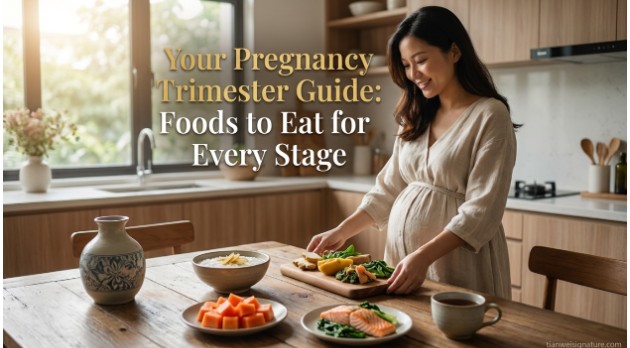
Planning what to eat while you’re pregnant can feel like a daily puzzle, especially when social media is full of “must-eat” lists that contradict each other. This Pregnancy Trimester Guide is here to simplify things with clear, stage-by-stage food choices that support your baby’s development and your own energy, digestion, and wellbeing.
If you’re also thinking ahead to postpartum and browsing confinement foods because you’re a first-time parent or there’s simply no one to cook, you can use pregnancy as a practical runway to build habits, stock your kitchen, and plan support early.
Pregnancy Trimester Guide: Foods to Eat for Every Stage
The foundations (all trimesters): what “good” looks like
Across the whole pregnancy, most medical guidelines point to the same basics: regular meals built from fruits and vegetables, whole grains, lean protein, and healthy fats.
A simple “plate” approach many parents find doable:
- Half a plate: vegetables and fruit (fresh, frozen, canned, or dried)
- One quarter: whole grains (brown rice, oats, wholemeal bread)
- One quarter: protein (fish, eggs, poultry, tofu, beans)
- Plus: a serving of dairy or a fortified alternative
A few key nutrients come up again and again in pregnancy advice:
- Folate or folic acid (early development)
- Iron (supports increased blood volume)
- Calcium and vitamin D (bones and teeth)
- Omega-3 fats, including DHA (brain and eye development)
- Iodine and choline (growth and development)
- Protein (building blocks for the baby and you)
Calorie-wise, “eating for two” is one of the most persistent myths. In general, extra calories are not needed in the first trimester; needs then rise modestly to about 340 extra calories per day in the second trimester and about 450 extra calories per day in the third trimester for a singleton pregnancy.
A realistic note on weight gain
Healthy weight gain is individual, and your midwife or doctor is your best guide. Many guidelines base targets on your pre-pregnancy BMI, with typical total ranges such as:
- BMI 18.5 to 24.9: about 11.5 to 16 kg
- BMI 25 to 29.9: about 6.8 to 11.3 kg
- BMI 30 or above: about 5 to 9 kg
Rather than chasing a number, focus on steady nourishment and consistent check-ins, especially if nausea, reflux, or changes in appetite make eating unpredictable.
First trimester (weeks 1 to 13): gentle nourishment through nausea
For many parents, the first trimester is about survival eating. Appetite dips, nausea hits, and food aversions can make a perfectly balanced day feel impossible.
Your priorities in this stage:
- Keep something down regularly (small, frequent meals)
- Prioritise folic acid (often via prenatal vitamins plus food)
- Hydrate, even if that means small sips often
Foods that tend to be easier to tolerate:
- Plain toast, crackers, oats, rice porridge
- Bananas, apples, pears, or chilled fruit
- Pasteurised yoghurt (try it cold if it smells trigger nausea)
- Soups with well-cooked ingredients
- Ginger in food or tea, if it suits you
Simple meal ideas:
- Breakfast: oats with milk, sliced banana, and a spoon of nut butter
- Lunch: congee with shredded chicken and cooked spinach
- Snack: yoghurt with berries or a small cheese sandwich on wholemeal bread
If smell sensitivity is strong, cold meals can help (for example, a chilled pasta salad made with fully cooked chicken and pasteurised cheese).
Second trimester (weeks 14 to 27): build your “power plate”
Often, the second trimester brings steadier energy and appetite. It’s a great time to establish routines because your baby is growing rapidly and your blood volume is expanding.
Nutrient focus for this stage:
- Iron: lean red meat, poultry, beans, lentils, fortified cereals
- Vitamin C alongside iron foods: oranges, kiwi, berries, capsicum (supports absorption)
- Calcium and vitamin D: milk, yoghurt, cheese, fortified alternatives
- Protein at each meal: eggs, tofu, fish, chicken
Aim for balanced meals that keep you full:
- Brown rice or quinoa bowls with cooked veg and protein
- Wholemeal wraps with chicken, hummus, and salad
- Stir-fries with tofu, broccoli, mushrooms, and rice
Seafood can be a smart inclusion here. Many authorities recommend 2 to 3 servings of low-mercury fish like salmon, sardines, trout, and anchovies per week for omega-3 fats.
If you want to explore what balanced, postpartum-friendly Chinese meals can look like later on, you can browse examples and read more about our approach to meals here.
That forward planning matters because many parents only start searching for “confinement food review” posts when they’re exhausted in late pregnancy. Getting familiar with options earlier keeps decision-making calmer.
Third trimester (weeks 28 to birth): nutrient density in smaller, comfier meals
By the third trimester, your baby’s growth accelerates, and your stomach may feel physically crowded. Many parents do better with smaller meals more often, especially if heartburn kicks in.
Focus nutrients:
- Protein (every meal and snack)
- Iron (continue as needs remain high)
- Omega-3 fats (keep fish choices low-mercury)
- Fibre and fluids (constipation is common in late pregnancy)
Comfort-forward food strategies:
- For heartburn: smaller portions, avoid very greasy or spicy meals if they trigger symptoms, and don’t lie down straight after eating
- For constipation: oats, chia, prunes, beans, lentils, vegetables, and plenty of water
- For swelling and fatigue: regular meals with protein and fibre to stabilise energy
Third trimester meal ideas:
- Breakfast: wholegrain cereal with milk and sliced fruit
- Lunch: lentil soup with wholemeal bread and a side salad
- Dinner: baked salmon, roasted sweet potato, and steamed greens
- Snack: hummus with carrots, or a hard-boiled egg with wholemeal crackers
This is also the trimester when many Singapore parents start planning confinement foods, especially if no family member is available to cook daily. Think of it as part of your nesting checklist, right alongside the hospital bag.
Food safety checklist (important in every trimester)
Some foods are riskier in pregnancy because of listeria, salmonella, or toxoplasma, which can be harmful to you and your baby. These are worth avoiding throughout pregnancy:
Avoid:
- Raw or undercooked meat, poultry, seafood, and eggs
- Unpasteurised milk and unpasteurised soft cheeses
- Refrigerated pâté and some deli-style spreads
- Raw sprouts (hard to wash thoroughly)
- Cold-smoked fish, unless cooked until steaming hot
- High-mercury fish such as shark, swordfish, king mackerel, tilefish, marlin, orange roughy, and bigeye tuna
Limit:
- Caffeine to under 200 mg per day (check coffee, tea, cola, chocolate, and energy drinks)
- Albacore (white) tuna is commonly limited to about one serving per week in many guidelines due to mercury
Skip:
- Alcohol (no amount has been proven safe in pregnancy)
Myths vs facts (the quick confidence boost)
A few calm clarifications that help cut through the noise:
- Myth: You need to double your portions
Fact: Needs rise modestly later on, and quality matters more than quantity. - Myth: All fish are dangerous
Fact: Low-mercury fish is encouraged in pregnancy for omega-3 fats, while high-mercury fish is best avoided. - Myth: You must avoid all cheese
Fact: Pasteurised dairy is generally safe. The concern is mainly unpasteurised and certain mould-ripened or blue cheeses unless cooked thoroughly. - Myth: Prenatal vitamins mean diet doesn’t matter
Fact: Vitamins complement your diet, but they do not replace fibre, protein, and the variety you get from food.
Thinking ahead: from pregnancy nutrition to confinement planning
If you’re already researching confinement foods, it helps to know what “support” can look like after delivery. Tian Wei’s menus balance traditional Chinese comfort with modern variety, including fusion dishes that begin from Week 2.
That means you might enjoy a rotation that includes options like Coq Au Vin, Seared Salmon with Cauliflower Cream, and Braised Pork Trotter in Black Vinegar, alongside classic, warming staples.
For parents who plan to breastfeed, we also cook with ingredients like garlic, ginger, fenugreek, and green papaya, which support breast milk supply as part of a balanced diet.
Only our herbal soups are reviewed by Ma Kuang TCM, and those soups are traditionally believed to support postpartum recovery in line with Chinese confinement practices.
If you want to lock in support early, you can check booking details and timing here.
You’ll also get practical flexibility: book now and activate later, plus two fresh deliveries daily (lunch and dinner), which can be a real relief when you’re healing and running on broken sleep.
Good pregnancy nutrition is built on steady, safe choices you can repeat, trimester by trimester, without perfection. When you’re ready to plan postpartum meals, too, make it easy on yourself and secure your slot early. Book Now. Book 1 month before your EDD to enjoy an early-bird discount.
