

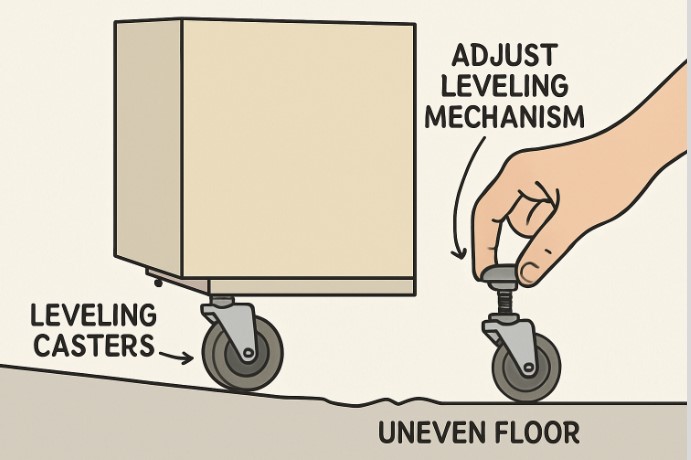
Introduction to Leveling Casters
In environments where the performance of operational equipment is critical—such as laboratories, manufacturing plants, and IT facilities—the stability and mobility of apparatuses are not just conveniences, but requirements. Leveling casters offer a practical solution by merging the flexibility of traditional wheels with the stability provided by adjustable feet. Their precision leveling mechanism ensures machinery remains stable, even on uneven floors, minimizing disruptions and maximizing efficiency.
Leveling casters are designed with both motion and security in mind. Whether you’re frequently rearranging heavy workstations, repositioning delicate lab instruments, or supporting server racks in high-traffic data centers, these casters protect your investment and streamline workflow setup. The ability to transport equipment and then lock it into a perfectly stable position reduces risk and helps maintain a safe, productive space.
Across industries, the efficient operation of machinery often demands more than just a stationary placement. Uneven flooring and shifting loads introduce unique alignment and balance challenges that ordinary casters cannot address. Leveling casters close this gap, offering a reliable way to compensate for variable conditions, protecting sensitive equipment from unwanted movement and vibration.
Modern manufacturing and technical workspaces are dynamic by nature, requiring solutions that adjust as needs evolve. In addition to reducing noise and vibration, leveling casters facilitate easy movement, allowing changes to equipment layout without sacrificing operational stability or worker safety.
Key Features of Leveling Casters
- Height Adjustment Mechanism: Most leveling casters feature an intuitive hand crank or pedal, allowing users to fine-tune equipment height with ease. This ensures precise alignment and helps balance heavy-duty machinery, an invaluable feature for industries where even small misalignments can compromise output.
- Swivel Capability: The ability to rotate freely on their axis gives many leveling casters easy movement in tight spaces, a crucial factor on crowded production floors and in compact labs where space is at a premium.
- Locking Mechanism: Integrated locking systems prevent unintended shifts or rolling, ensuring that once placed, heavy or sensitive equipment will not move unexpectedly—a key feature for minimizing workplace accidents.
- Load Capacity: Available in a spectrum ranging from lightweight models for general office use to robust options suitable for industrial-scale loads, leveling casters support diverse applications and help organizations scale mobility solutions to their specific requirements.
Benefits of Using Leveling Casters
- Enhanced Stability: Leveling casters minimize vibrations and equipment wobble, an essential factor for protecting both delicate tools and heavy machinery. Their stability helps extend the life of precision instruments and prevents product defects.
- Improved Ergonomics: Adjustable casters support healthy working conditions. By letting users lift or lower equipment to comfortable working heights, they reduce back strain and repetitive stress injuries.
- Versatility: Suitable for a variety of flooring types, these casters are perfect for labs, manufacturing lines, retail environments, and IT spaces that must adapt to frequent changes. According to The Manufacturer, leveling casters also provide several key advantages that improve efficiency and safety in the workplace.
- Safety Enhancements: Stable equipment directly translates into a safer work environment, drastically reducing the risk of accidental tipping or tool movement during use.
Applications Across Industries
- Laboratories: The sensitive nature of lab instruments demands both stability and mobility. Leveling casters dampen vibrations and help maintain accuracy for sensitive testing and data collection.
- Manufacturing: Heavy machinery or modular workstations rely on strong, adjustable bases. Casters make it easy to shift layouts in response to new workflow demands without sacrificing stability or damaging floors.
- Retail: Retail display units benefit from the ability to adapt layouts quickly. Once positioned, casters lock displays in place, preventing shifts that could confuse customers or cause products to fall.
- Data Centers: Servers and networking units mounted on leveling casters simplify maintenance while minimizing the risk of tip-overs or unwanted movement, further protecting critical infrastructure.
Choosing the Right Leveling Casters
- Load Capacity: Always verify that selected casters can reliably support the total equipment weight. Overloading can cause equipment failure and hazardous work conditions.
- Material Composition: Opt for casters made from materials matched to the working environment. For instance, stainless steel options withstand moisture and chemicals, while reinforced plastics are suitable for lighter, less corrosive environments.
- Adjustment Mechanism: Select casters with easy-to-use, ergonomic leveling controls to streamline transitions between locations or workstations.
- Floor Compatibility: Protect your space by ensuring casters will not damage flooring types—rubberized or polyurethane wheels can minimize marring and ensure quiet operation.
Maintenance and Care
- Regular Inspections: Check casters periodically for signs of wear or fastening issues to prevent instability and equipment downtime.
- Cleaning: Remove dirt and debris to preserve smooth operation and help prevent premature breakdown.
- Lubrication: Use manufacturer-recommended lubricants on moving parts to minimize friction and extend caster life.
- Adjustment Checks: Routinely test the leveling mechanism to ensure it remains accurate and easy to operate.
Conclusion
Leveling casters significantly enhances equipment performance, safety, and flexibility across a broad spectrum of industries. They blend the maneuverability of wheels with robust stability systems that safeguard sensitive and heavy equipment against the challenges of uneven surfaces and shifting configurations. By choosing the appropriate caster system, diligently maintaining it, and prioritizing compatibility, organizations can ensure longevity, maximize workplace safety, and boost operational efficiency.
