

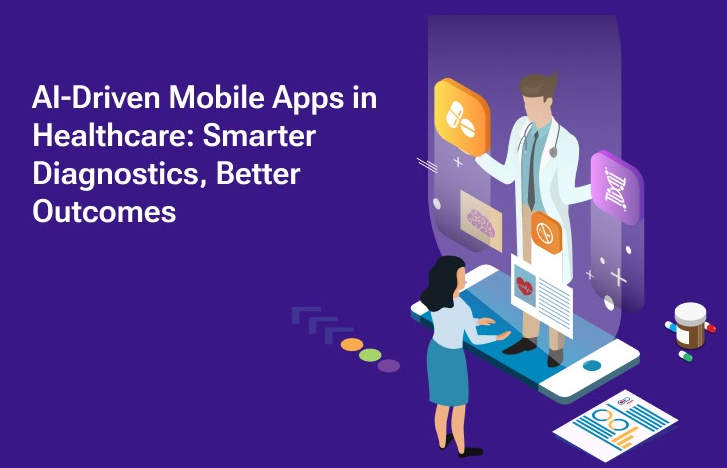
In today’s digital-first world, the convergence of artificial intelligence (AI) and mobile technology is revolutionizing the healthcare sector. With increasing pressure on healthcare systems, rising patient expectations, and the need for precise diagnostics, AI-driven mobile apps in healthcare have emerged as a powerful solution that drives smarter decision-making and improved clinical outcomes.
For enterprise owners, CEOs, CTOs, and other CXOs looking to invest in healthtech, AI-integrated mobile apps are no longer just an innovation—they’re a competitive necessity. Partnering with a reliable mobile app development company in Dubai can accelerate the adoption of AI solutions, helping healthcare providers stay ahead in a rapidly evolving digital landscape.
The Growing Role of AI in Healthcare Mobile Apps
Artificial Intelligence is not a buzzword in healthcare anymore—it’s actively transforming how medical data is processed, how AI-powered diagnostics in healthcare are made, and how care is delivered.
Healthcare mobile apps for startups are harnessing machine learning, natural language processing (NLP), and computer vision to:
- Speed up diagnosis
- Monitor patient vitals in real-time
- Improve medication adherence
- AI for patient care improvement
- Streamline administrative workflows
These applications are already in use in fields such as radiology, dermatology, mental health, cardiology, oncology, and chronic disease management.
Key Drivers Behind AI-Powered Mobile App Adoption
As a decision-maker, it’s crucial to understand what’s pushing this wave forward:
1. Data Explosion
Healthcare accounts for 30% of global data generation and is projected to grow at a faster rate than any other industry. AI is essential to extract meaningful insights from this massive data pool.
2. Shortage of Skilled Professionals
There is a global shortage of healthcare providers. AI bridges the gap by assisting doctors with intelligent diagnostics and triaging.
3. Demand for Personalized Care
Modern patients expect personalized, accessible, and proactive healthcare. AI enables mobile apps to offer tailored recommendations, real-time alerts, and remote monitoring.
4. Post-Pandemic Shift to Digital Health
AI now enhances the capabilities of these platforms by adding predictive intelligence and automation.
Top Use Cases of AI in Mobile Healthcare Apps
Let’s explore how AI is being applied across real-world healthcare mobile app development solutions.
1. Smarter Diagnostics
AI algorithms can analyze medical images, symptoms, lab reports, and patient history to suggest potential diagnoses.
Example:
- SkinVision and DermAssist use AI in healthcare to detect signs of melanoma through smartphone camera images.
- Aidoc and Qure.ai analyze CT scans and MRIs for abnormalities, significantly reducing diagnostic time.
For CTOs and CIOs, integrating diagnostic capabilities via AI shortens the time to care and improves diagnostic accuracy, especially in underserved or rural areas.
2. Remote Patient Monitoring (RPM)
Mobile health apps with AI can now collect data from wearable sensors (heart rate, blood glucose, blood pressure) and apply intelligence technologies to identify abnormal patterns or predict potential health issues.
Benefits of mobile apps in healthcare:
- Proactive care interventions
- Reduced hospital readmissions
- Real-time alerts to physicians and caregivers
3. Predictive Analytics for Chronic Disease Management
AI models forecast disease progression by analyzing patient history, lifestyle, and biometric data, helping clinicians intervene early.
Use Case:
A diabetes management app can use AI to predict blood sugar spikes and suggest dietary/lifestyle changes in real time.
This is particularly impactful for population health management in large healthcare enterprises.
4. Virtual Health Assistants
AI-powered chatbots and voice assistants are reducing the burden on call centers and administrative teams by handling:
- Appointment scheduling
- Medication reminders
- Basic triage and symptom checking
Tools:
- Buoy Health
- Babylon Health
These AI assistants are trained on vast medical databases and NLP to interact naturally with patients.
5. Medication Adherence Monitoring
For enterprise stakeholders, ensuring patients follow their treatment plans is crucial to outcomes and cost savings. AI apps can:
- Remind patients via push notifications or smart watches
- Use image recognition to verify pill intake
- Monitor refill patterns
This results in better compliance and fewer complications.
Business Benefits for Healthcare Enterprises and CXOs
Adopting AI-driven mobile apps in healthcare isn’t just about innovation—it’s a strategic business decision with tangible ROI.
- Operational Efficiency: AI automates tasks like appointment scheduling, claims processing, and patient onboarding—cutting costs and reducing human errors.
- Scalability: Mobile apps allow healthcare organizations to scale their services without expanding physical infrastructure—particularly helpful in remote and rural settings.
- Competitive Advantage: Early adopters of AI-based solutions set themselves apart with cutting-edge care delivery, personalized engagement, and reduced treatment cost to build a healthcare app.
- Enhanced Patient Experience: Personalized AI interactions, proactive alerts, and seamless teleconsultations lead to better patient satisfaction and loyalty.
- Regulatory Readiness: AI apps can also support HIPAA compliant app development, GDPR, and FDA by ensuring secure data handling, auditable logs, and robust consent mechanisms.
Challenges to Consider For AI-Driven Healthcare Mobile Apps
While the potential is immense, leaders must be aware of certain challenges before deploying AI in mobile health apps:
- Data Privacy and Security: Any AI system must adhere to strict encryption and compliance standards.
- Bias in AI Models: Poorly trained AI models may lead to inaccurate diagnoses or suggestions. Continuous training with diverse datasets is critical.
- Integration with Legacy Systems: Many hospitals still rely on older EMR systems. Your AI-powered app should integrate smoothly to avoid data silos.
- Regulatory Approvals: Some AI functions (e.g., diagnostics) require FDA or CE approval. CTOs must factor in time and budget for regulatory clearance.
Real World Examples of Implementing AI-Driven Mobile Apps in Healthcare
How AI Helped Reduce Diagnostic Time by 50%
A major healthcare enterprise deployed an AI-powered mobile app that enabled primary care doctors to scan and analyze skin lesions using smartphone cameras.
Results:
- 50% reduction in time to diagnosis
- 30% increase in early-stage cancer detection
- $2M saved annually on manual image assessments
This not only improved outcomes but also unlocked new revenue streams through app subscriptions and licensing.
AI Chatbot Reduced ER Overload by 40%
A regional hospital network integrated an AI-driven symptom checker and triage chatbot into its mobile patient app to manage emergency room traffic.
Results:
- 40% reduction in non-emergency ER visits
- 25% faster patient routing to appropriate care pathways
- $1.5M saved annually in operational costs
The solution enhanced patient experience while allowing clinical staff to focus on critical cases, improving overall hospital efficiency.
AI App Boosted Chronic Disease Management Adherence by 60%
A national health insurance provider introduced a mobile AI app that provided personalized reminders, diet tracking, and teleconsultation integration for patients with Type 2 diabetes.
Results:
- 60% improvement in patient medication and diet adherence
- 35% reduction in diabetes-related hospital admissions
- 20% higher member satisfaction scores
This resulted in healthier outcomes and significantly reduced long-term healthcare expenses for both patients and providers.
AI Voice Assistant Improved Elderly Care at Home
A senior care organization deployed an AI-powered voice assistant mobile app that monitored medication, daily routines, and emergency events for at-home elderly patients.
Results:
- 45% reduction in missed medication incidents
- 30% increase in caregiver efficiency
- $1.2M saved in avoidable in-person visits annually
The app enabled aging patients to live independently longer, while offering families peace of mind and real-time health insights.
Future of AI-Driven Mobile Apps in Healthcare
By 2030, AI in healthcare is expected to be a $200 billion market, and mobile apps will play a pivotal role in that growth. We can expect:
- Real-time disease outbreak tracking
- Personalized medicine based on genomics
- AI-powered surgical planning
- Voice-based diagnostics
- AI-assisted mental health therapy
Forward-thinking CXOs who embrace this transformation early will not only lead the industry—but define it.
Final Thoughts
Healthcare is moving from reactive care to proactive, predictive, and personalized care. AI-driven mobile apps are the linchpin in this transformation.
For CEOs, CTOs, and CXOs, the question is no longer if you should adopt AI—but how quickly you can scale its benefits.
By investing in AI-powered mobile health solutions today, you will not only streamline your operations but also drive better outcomes for patients—while future-proofing your organization for the next generation of healthcare.
